
Page Assessment for
https://ieoffices.com/industry/higher-ed/
Overall Impression
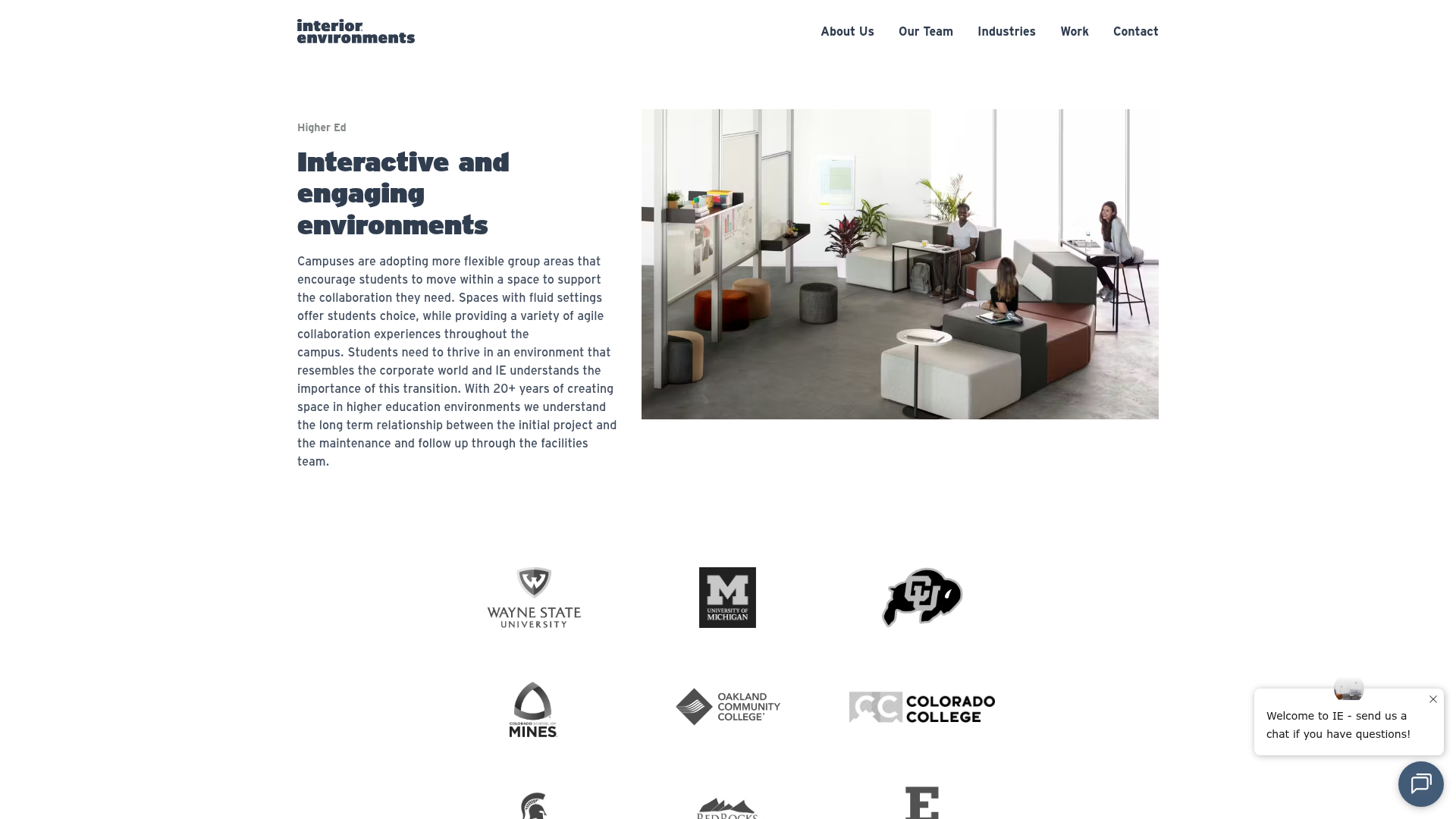
This is a superficial portfolio page that functions as a visual brochure but lacks the data-driven substance required for modern B2B decision-making. It relies entirely on 'vibe' and logo association while ignoring the technical needs of both human auditors and AI agents.
Overall Strengths
- Strong visual credibility through a diverse logo wall of major universities.
- Clear industry-specific segmentation in both content and URL structure.
- Direct links to relevant case study examples.
Weaknesses & Gaps
- Complete absence of JSON-LD or Microdata schema markup.
- Total lack of quantifiable metrics or ROI data.
- No on-page testimonials or customer reviews.
- Zero support, FAQ, or training documentation.
- Poor heading hierarchy (H6 used for primary labels).
- No specific certifications or trust badges visible in the HTML.
Recommendations
- Implement CaseStudy and Organization schema markup immediately.
- Integrate at least two quantifiable success metrics (e.g., '% increase in student engagement' or 'X projects completed') into the Higher Ed header.
- Add a specific FAQ section for higher education facilities managers with corresponding FAQ schema.
- Fix the heading hierarchy by changing the 'Higher Ed' H6 to an H1.
Ready for the Full Picture?
This single-page analysis is just one piece of the puzzle. Get a comprehensive AI Readiness Assessment covering up to 30 pages and meet with a growth strategist to build your action plan.
Book Your Full AssessmentDetailed CLEAR Breakdown
Human Buyer Seeks social proof, authority (awards, partnerships), and a clear, jargon-free value proposition.
The page establishes baseline credibility through a '20+ years' claim and a substantial wall of recognizable higher education logos. However, it lacks specific professional certifications (ISO, etc.) or leadership recognition. The value proposition is clear but leans heavily on generic marketing language like 'interactive and engaging environments' without defining a unique methodology.
AI Agent Processes verifiable data points: structured data (schema), consistent terminology, and off-site mentions from reputable sources.
The page lacks any form of structured data or schema markup (Organization or Product). While the core offering is stated early, the heading hierarchy is logically flawed, utilizing an H6 for the industry name before an H2 headline. Verifiable credentials are limited to internal links rather than third-party citations.
Human Buyer Looks for tangible benefits (ROI, efficiency) and a logical fit (integrations, implementation ease).
The logic is primarily narrative, arguing that campus spaces should mirror corporate environments. However, there is a total failure to provide quantifiable ROI, cost-savings metrics, or specific technical integration details. Benefits are articulated as feelings rather than hard outcomes.
AI Agent Extracts quantifiable results from case studies and analyzes technical documentation for APIs and compatibility.
There are no tables, lists of technical specs, or extractable performance data. The 'logic' is buried in paragraph text which makes it harder for agents to verify as objective fact. No Product schema exists to define features or functional benefits.
Human Buyer Needs proof (case studies, testimonials) but is also influenced by story, values, and purpose.
Evidence is the page's strongest suit, featuring three specific case studies and a large logo list. It evokes a sense of partnership and experience. However, there are zero direct testimonials or human-centric quotes on the page itself; users must click away to see the actual impact.
AI Agent Prioritizes verifiable evidence from data sheets and reports. Can perform sentiment analysis but does not "feel" emotion.
Case studies are linked and clearly labeled, which is helpful. However, the absence of Review or Rating schema markup prevents AI agents from aggregating customer satisfaction. No sentiment-rich testimonial blocks are present on the landing page for easy extraction.
Human Buyer Assesses if the company's vision aligns with their long-term goals. Needs easy access to support info (SLAs, training).
The page mentions a 'long term relationship,' but provides no evidence of what that looks like. There is no FAQ, no support information, no mention of training, and no customer success resources. It treats the buyer as someone who only cares about the initial sale, not the lifecycle.
AI Agent Looks for structured support plans, knowledge base links, and keywords related to future development.
The HTML contains zero FAQ schema and no links to a knowledge base or documentation. Terms like 'SLA' or 'support' are entirely absent. There is no machine-readable evidence of post-purchase alignment.
Human Buyer Values prompt, personalized responses and content relevant to their industry, role, and pain points.
The page is highly relevant to the 'Higher Ed' audience. Contact information is available in the footer and via a chat widget, though not emphasized on the page body itself. The segmentation is clear via the URL and heading.
AI Agent Evaluates contact method availability and assesses relevance via content segmentation, tagging, and keywords.
The URL structure (/industry/higher-ed/) is excellent for categorization. However, the page lacks ContactPoint schema markup. While content is industry-segmented, it lacks specific metadata to signal target roles or company sizes.